Quick Answer
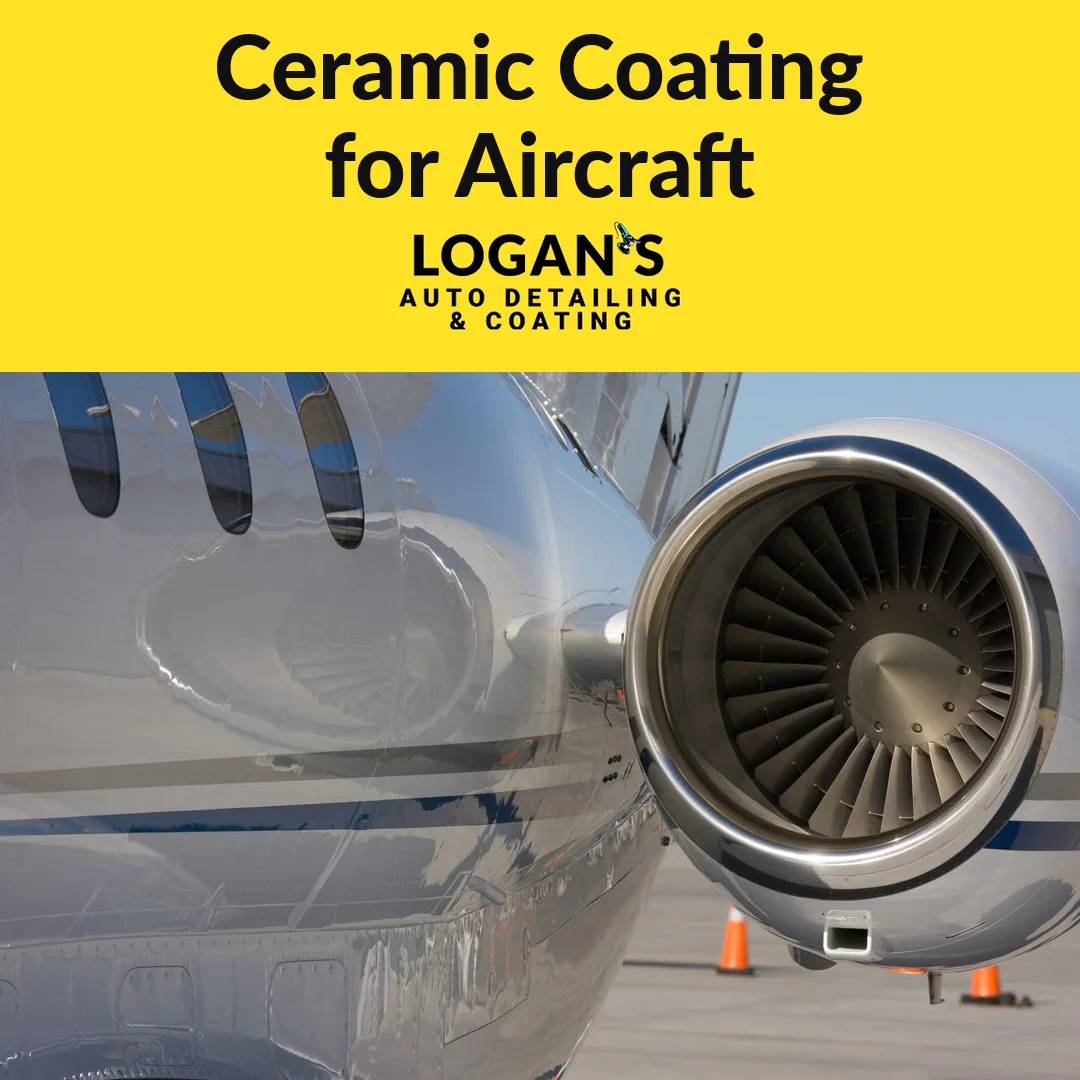
Yes — for most aircraft that fly regularly or live on a ramp, ceramic coating is one of the highest-return protection upgrades available. Aviation-grade ceramic coatings bond to paint and leading edges and shrug off the four things that age an airframe's finish fastest in Southern California: UV exposure, exhaust staining, baked-on bugs, and salt air. The day-to-day payoff is speed: coated surfaces release bugs and grime with a wipe, so post-flight cleanups drop from hours to minutes.
Like everything in aircraft detailing, coating is quoted per airframe — typically starting in the low thousands for small aircraft. Request a quote with your aircraft type and home airport for a real number.
What an Aviation Ceramic Coating Actually Does
The chemistry is a cousin of the ceramic coatings we install on cars: a liquid polymer that cures into a hard, hydrophobic layer bonded to the paint. On an airframe, that layer works harder than it ever does on a car:
- UV defense — LA ramp sun is relentless, and oxidized, chalky paint is the default fate of uncoated aircraft parked outside. Coating dramatically slows it.
- Exhaust and soot release — exhaust staining wipes off coated surfaces instead of etching in flight after flight.
- Bug release on leading edges — the tedious scrubbing every owner knows drops to a wipe-down, and on small aircraft clean leading edges are an aerodynamics item, not just cosmetics.
- Salt-air resistance — for aircraft based near the coast at Santa Monica or Long Beach, the coating gives salt film less to grab and makes the corrosion-prevention wash cadence faster and more effective.
- Deicing-fluid protection — coatings stand up to the chemistry that dulls unprotected paint.
How Coating a Plane Differs From Coating a Car
- Aviation-approved products only. The coating and every prep chemical under it must be aviation-safe — automotive decontamination chemistry has no business near aviation aluminum, acrylic windows, or sealed seams.
- Prep is the job. A coating locks in whatever is beneath it. Oxidation and staining have to come off first — on a neglected airframe, that oxidation removal is most of the labor, which is why quotes vary so much between aircraft.
- Masking discipline. Pitot tubes, static ports, antennas, and sensors are protected before any product comes out — the same no-touch-zone discipline as every aircraft detail we perform.
- Sheer surface area. Even a modest single is a bigger coating job than an SUV; a jet is a different scale entirely. This is hangar work, scheduled around your flying.
When It's Worth It — and When It Isn't
Worth it: aircraft flown weekly, ramp-parked aircraft, coastal-based airframes, charter and managed aircraft where presentation is revenue, and any owner tired of scrubbing bugs off leading edges every Sunday.
Wait on it: paint that's heavily oxidized or failing (correction first, or the coating preserves damage), and aircraft headed for a paint shop — coat the new paint instead, when it will bond to a perfect surface and protect it from day one.
The Cost Question
Coating is quoted per airframe, driven by size, paint condition, and how much prep the surface needs — our aircraft detailing cost guide covers typical LA-market ranges for the detailing work that precedes it. The honest framing: a coating costs a fraction of a repaint, and its entire job is pushing that repaint years further away.
Coated at Your Hangar, Anywhere in LA
We're minutes from Van Nuys Airport (VNY) and coat aircraft hangar-side across the region — Burbank, Santa Monica, and every LA-area field. New to aircraft detailing entirely? Start with our complete airplane detailing guide, or call (310) 388-4-FLY and tell us what you fly.