Quick Answer
Ceramic coating is the right call for most Los Angeles daily drivers: $650–$2,600 installed at our shop, years of UV and chemical protection, and a car that stays clean twice as long. Paint protection film (PPF) is the rock-chip specialist: a physical urethane layer that absorbs impacts ceramic can't, at roughly $2,000–$8,000 depending on coverage. Paint protection coating (PPC — Icon Rocklear) is the newest category: a thick, self-levelling clear coat that installs like a coating but protects more like a film, at from $1,500 for the whole car. Logan's Auto Detailing & Coating in Van Nuys is the exclusive Icon Rocklear installer for Los Angeles, and we install ceramic coatings every week — so below is the three-way comparison the other articles can't write.
The Three Technologies in Plain English
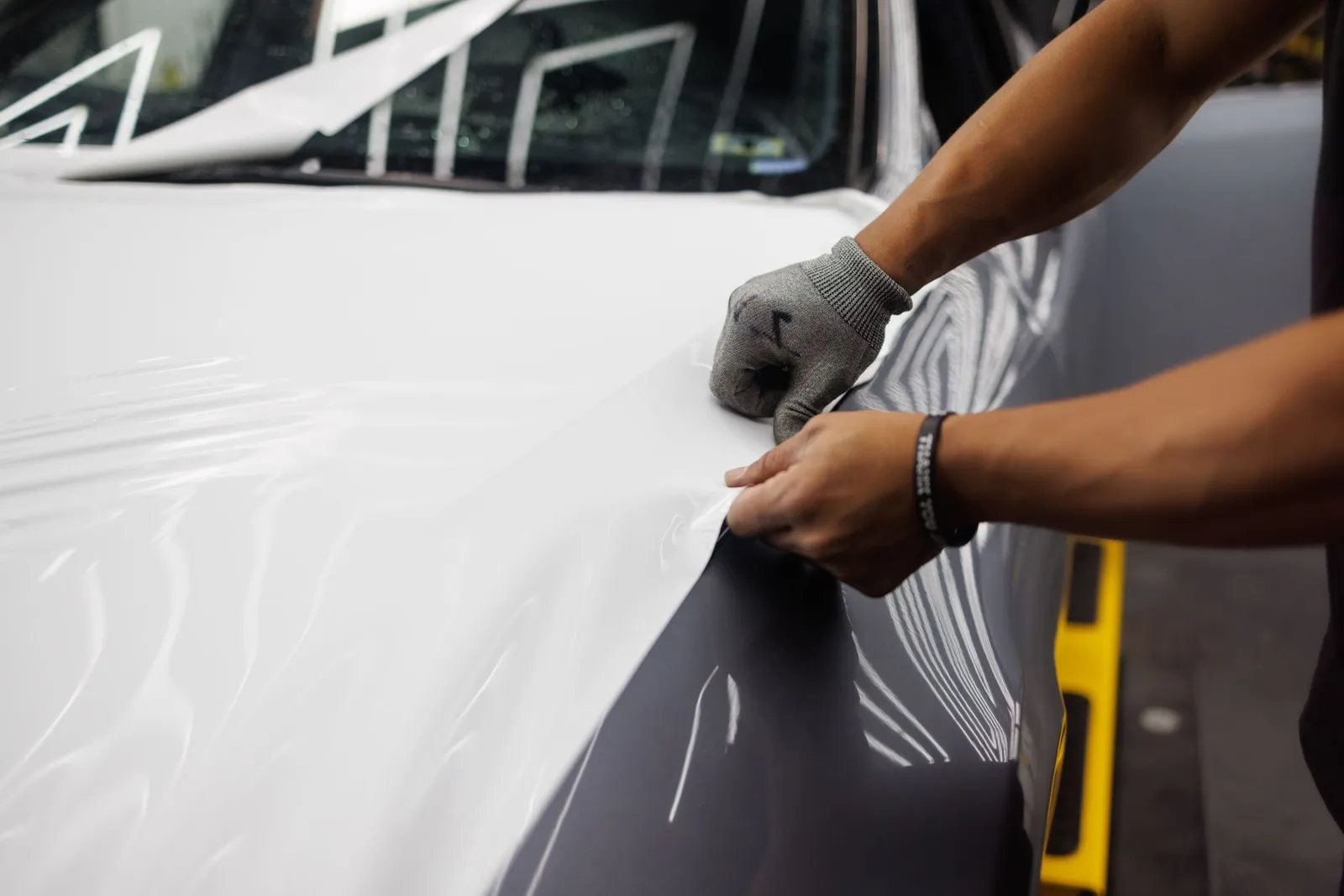
Paint protection film (PPF)
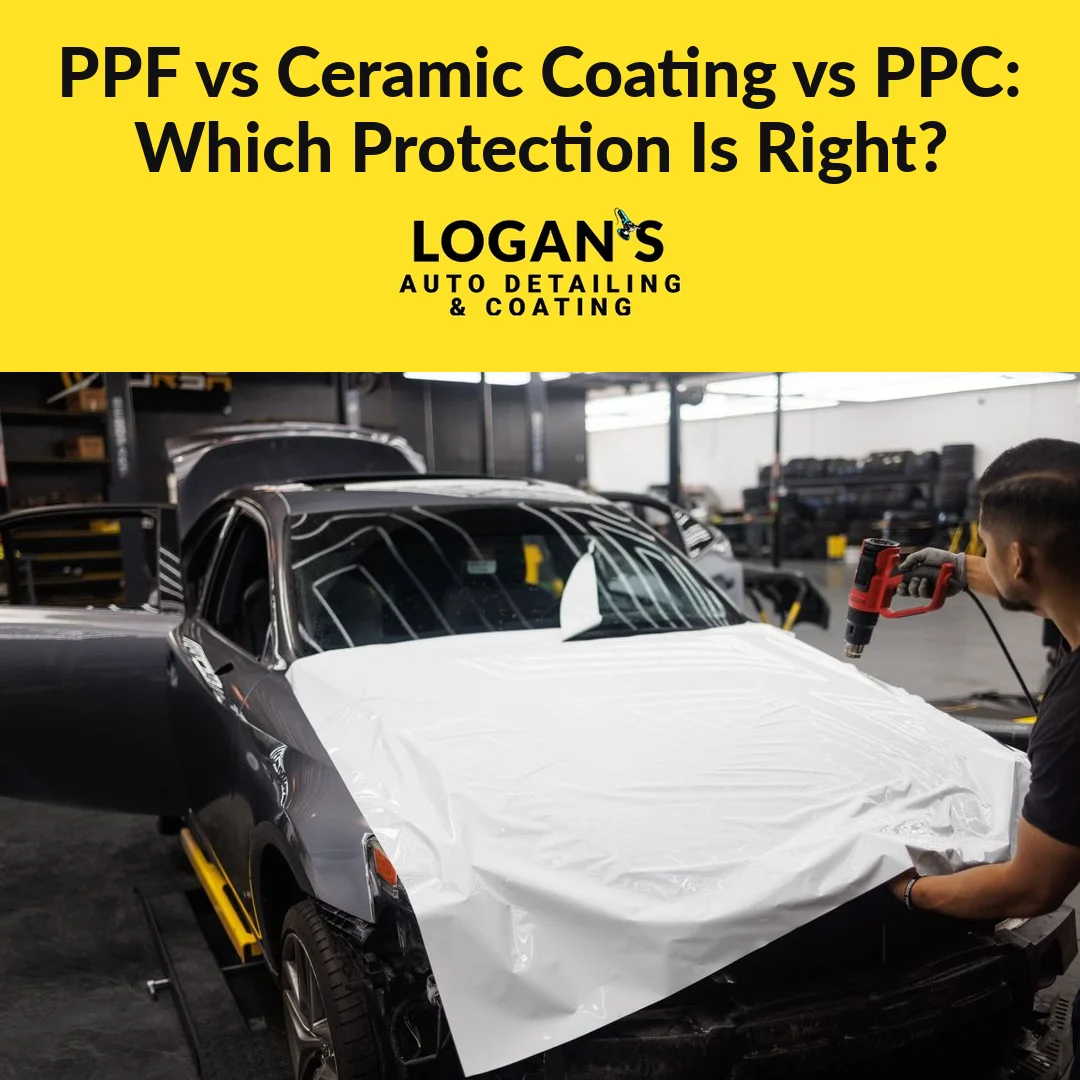
PPF is a physical layer — a clear urethane film, roughly 6–8 mils thick, cut to pattern and wrapped onto each panel. Think of it as a transparent shield over the paint. Because it has actual thickness and elasticity, it absorbs impacts: rock chips, road debris, sandblasting on the 5 at 70 mph. Quality films self-heal light swirls with heat and carry 5–10 year warranties.
Ceramic coating
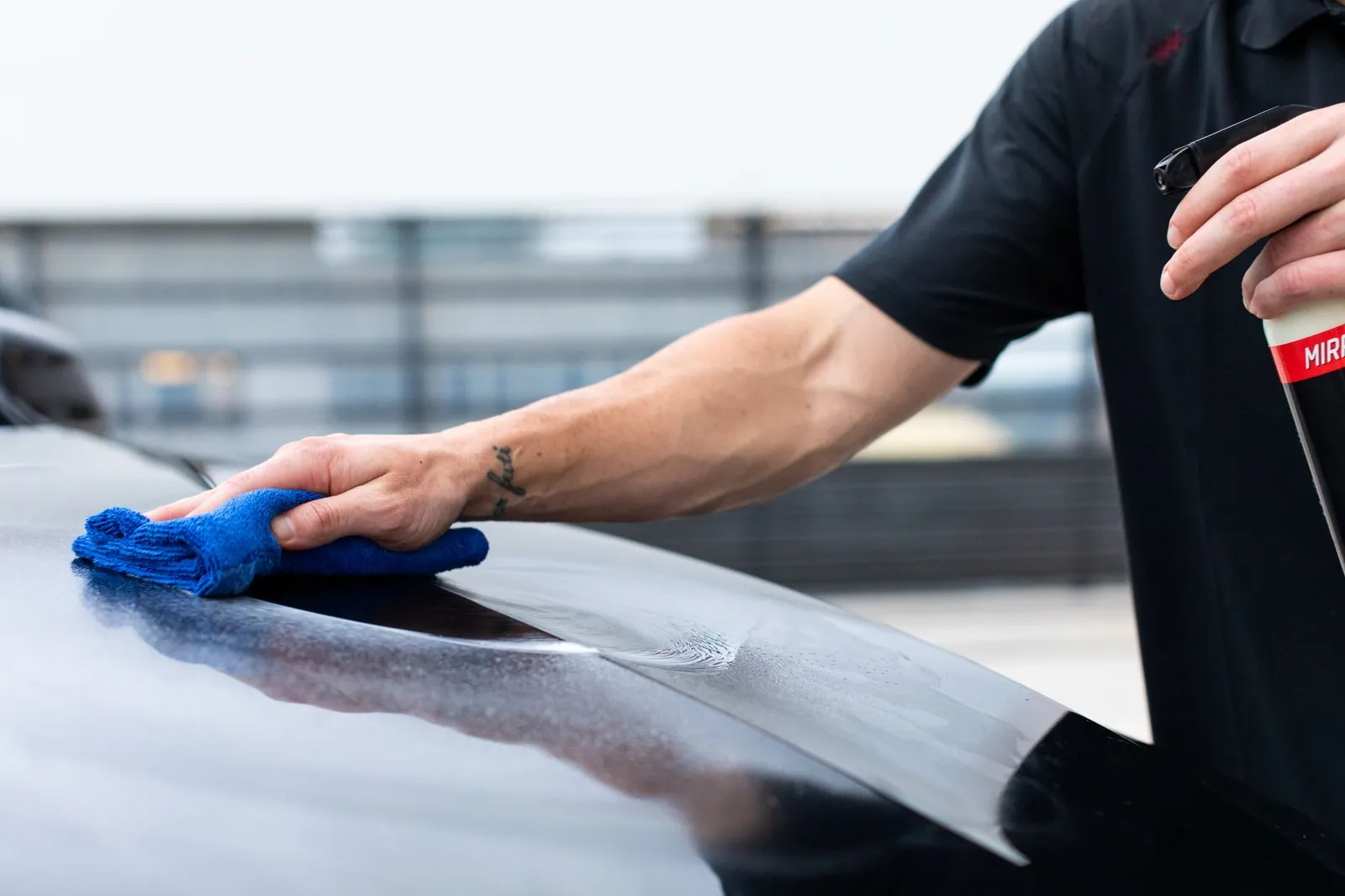
A ceramic coating is chemistry, not film — a liquid polymer (SiO₂-based) that cross-links with your clear coat and cures into a hard, glass-like sacrificial layer measured in microns. It won't stop a rock chip, but it's spectacular at everything Los Angeles throws at paint daily: UV oxidation, hard-water etching, bird droppings, brake dust, wildfire ash. Water beads off, grime releases with a rinse, and the gloss is deeper than any wax. We install two tiers of ceramic coating: Adam's Advanced ($650–$950) and System X Max G+ with a Lifetime warranty ($1,600–$2,600).
Paint protection coating (PPC — Icon Rocklear)
PPC is the category most drivers haven't heard of yet, and it sits deliberately between the other two. Icon Rocklear is a self-levelling protective clear coat applied like a coating but building a layer dramatically thicker than ceramic — lab-tested against UV, chemicals, and abrasion, with a 48-hour cure. You get film-like protective depth without seams, edges, or wrap lines, plus the hydrophilic, deep-gloss behavior of a coating. It's applied to the entire vehicle, not select panels, so there's no "protected hood, naked doors" compromise. Logan's is the exclusive Los Angeles installer, currently from $1,500 installed depending on vehicle size.
PPF vs Ceramic vs PPC: The 12-Row Comparison
| PPF | Ceramic Coating | PPC (Icon Rocklear) | |
|---|---|---|---|
| What it is | Urethane film, cut & wrapped | Liquid SiO₂ polymer, cured | Self-levelling protective clear coat |
| Thickness | ~150–200 microns | ~1–3 microns | Many times thicker than ceramic |
| Rock-chip protection | Excellent | Minimal | Strong |
| UV / oxidation defense | Good | Excellent | Excellent |
| Chemical & ash resistance | Good | Excellent | Excellent |
| Hydrophobic self-cleaning | Only if topped with coating | Excellent | Excellent |
| Gloss enhancement | Neutral to slight | Deep wet gloss | Deepest — self-levels |
| Visible edges / seams | Yes (panel edges) | None | None |
| Typical LA install price | ~$2,000 (partial) – $8,000 (full body) | $650–$2,600 (whole car) | from $1,500 (whole car) |
| Install time | 2–5 days full body | 3–12 hours + cure | 1–2 days + 48-hour cure |
| Lifespan / warranty | 5–10 years (film warranty) | Years; System X = Lifetime warranty | Long-term; the step above ceramic |
| Failure mode | Can yellow, peel, or lift at edges if neglected | Wears gradually, re-applicable | Wears gradually, no film failure modes |
Prices are our real 2026 installed prices for coating and PPC (full price guide here); PPF figures are typical LA-market ranges — we're quoting what the market charges, not selling film.
Which One Fits Which Driver?
The daily commuter (405/101 miles, street or driveway parking). Ceramic coating. Your enemies are sun, fallout, sprinklers, and time — exactly what ceramic handles — and the $900 medium-car install is the best protection-per-dollar in this comparison. If your front bumper collects chips, add partial-front PPF over a coated car, or step up to Rocklear.
The keeper. You plan to hold the car 5+ years? This is Rocklear territory. The thick, seamless layer means the paint underneath simply doesn't meet Los Angeles: no chip-prone bare panels, no film edges collecting wax lines, one coherent finish that self-levels minor texture as it cures. It's also why we route show cars and just-restored paint here — the gloss is the deepest of the three.
The canyon runner / track-day car. Full-body PPF, honestly. If your weekends involve gravel-strewn canyon roads or track sessions, physical impact protection wins, and no coating chemistry replaces it. We'll tell you that to your face — and coat over the film so it cleans up like ceramic.
The lease. Entry ceramic (Adam's, $650–$950). It keeps the car effortless to maintain for the term and helps at turn-in inspection without over-investing in a car you're returning.
The Part Every Comparison Skips: Prep Decides the Result
All three technologies lock in whatever surface they're applied over. Swirls under film are swirls forever; haze under coating is haze forever. That's why every install at our shop starts with decontamination and a paint assessment, and why swirled or scratched cars get paint correction first ($600–$1,500 depending on stage). A one-step correction removes 50–70% of defects; a two-step removes 85–95%. On dark colors especially, correction-then-protection is the difference between "protected" and "protected showpiece."
This is also the honest explanation for cheap quotes anywhere in LA: the fastest way to cut a protection price is to skip the prep the product needs to perform.
LA-Specific Factors That Change the Math
- Sun, always. Our cars don't get a UV off-season. Films can yellow over years of it; quality ceramics and Rocklear are engineered for it. Whatever you choose, unprotected is the expensive option — oxidized clear coat repaints run four figures.
- Wildfire ash. Alkaline ash sits on Valley cars for weeks every season. On coated or Rocklear'd paint it rinses off; on bare paint it etches. (Read our ash removal guide before fire season.)
- Hard water. Sprinkler overspray and mineral-heavy water spot everything. Hydrophobic surfaces shrug it off — another point for coating/PPC over bare film.
- Freeway sandblasting. If your commute includes fresh chip-seal or truck-heavy corridors, front-end film or Rocklear's thickness earns its keep.
What About Combining Them?
The premium builds we do most often:
- Correction → Ceramic — the LA standard. Most protection value per dollar for most cars.
- Correction → Rocklear — the keeper build. Seamless full-car protection, deepest gloss, no film maintenance.
- Correction → front-end PPF → Ceramic over everything — the freeway-warrior build: film where rocks hit, ceramic everywhere for self-cleaning and UV.
Not sure which build your car and your driving justify? That's literally what our free in-person consultation is for — bring the car, get a straight answer.
FAQ: PPF vs Ceramic Coating vs PPC
Is ceramic coating better than PPF?
They solve different problems. PPF physically absorbs rock chips; ceramic chemically resists UV, water spotting, and grime. For most LA commuters ceramic delivers more everyday value; for high-debris driving PPF wins. Rocklear PPC covers the widest slice of both.
What exactly is a PPC (paint protection coating)?
A newer category: a self-levelling protective clear coat that installs like a coating but builds a far thicker layer — film-like depth without seams or edges. Icon Rocklear is the flagship product, and Logan's is its exclusive Los Angeles installer.
How much does each option cost in Los Angeles in 2026?
At our Van Nuys shop: ceramic $650–$2,600 installed by size and tier, Icon Rocklear from $1,500. Full-body PPF in the LA market typically runs $5,000–$8,000 at reputable shops; partial-front film $2,000+.
Can you apply ceramic coating over PPF?
Yes — it's the right way to run film. The coating adds hydrophobics and UV resistance the film alone lacks, and the whole car washes the same way.
Does PPF or ceramic coating remove existing scratches?
Neither — both seal in the surface as-is. Scratch removal is paint correction, done before protection is applied.
Which lasts longest?
Warranty-wise: System X Max G+ ceramic carries a Lifetime warranty at our shop; quality films warrant 5–10 years; Rocklear is engineered as long-term protection a tier above ceramic. Real-world lifespan tracks maintenance more than marketing.
Is Icon Rocklear worth it over ceramic?
If you're keeping the car and want one seamless layer that covers chips-to-UV without film's failure modes — yes. If you're budget-first or leasing, ceramic remains the smart buy. Our Rocklear page has the lab-test numbers to compare.
Get a Straight Answer for Your Car
We install two of the three technologies in this article and will happily tell you when the third (film) is the honest answer. Real prices, no "call for quote" games — from the Valley's 5.0-star shop.
Book a Free In-Person Consultation · See Ceramic Coating · See Icon Rocklear · Request a Quote